What her career signifies
An interim assessment, written seventeen months into her term as minister. It weighs three questions: what her rise says about the CDU and eastern Germany, what her moves between government and industry say about German political ethics, and what her policies are doing to the energy transition. Supporters and critics are given in their own terms.
- I
An east German woman in a western party
Promoted for who she was as much as for what she did.
- II
The revolving door
Government, lobby, company, government again.
- III
An imprint on the Energiewende
From climate first to cost first.
An east German woman in a western party
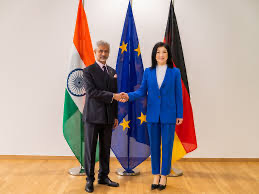
Verified fact Reiche was born in the GDR in 1973, entered the Bundestag at 25 in 1998 and became, in 2025, a member of the Merz cabinet with an east German biography. At each of the turning points of her career, party leaders and observers named her origins and her gender as part of the reason she was chosen. In 2002 Der Spiegel wrote that she was meant to give Edmund Stoiber's campaign team a "young, female, east German and Protestant" face. In 2025 Tagesschau wrote that the attributes "east German, woman, with experience in the energy industry" were likely to have suited Friedrich Merz's cabinet planning.
Analysis This is the double edge of representation. Her career demonstrates that a young woman from Brandenburg, without a western party network, could reach the top tier of the Union. It also shows how far that path depended on patronage from party leaders who needed east German and female faces, rather than on a strong home base: her regional offices were narrowly won, and she was voted off the federal executive in 2016 once she had left politics. The CDU career page sets out that record.
Her biography is distinctive in a second way. She came into politics from a chemistry laboratory, and back into it from the management of a regulated infrastructure company. That gives her a claim to technical competence that she uses, at times framing arguments by reference to her experience as a former energy manager.
Criticism Not everyone in the east welcomed her selection. Tagesschau reported that the CDU in Saxony-Anhalt was annoyed in April 2025, having hoped that Sven Schulze or Reiner Haseloff would join the cabinet. Analysis She has lived in North Rhine-Westphalia for many years and held no eastern party office since 2016, so her east German identity rests on biography more than on a current political base.
The revolving door
Reiche has crossed the line between government and the industry it regulates three times. Each crossing was legal; each prompted a debate about whether the law is strict enough.
- 2015
State secretary → utilities association
Her move to VKU became public while she was a transport state secretary and a member of parliament. A cooling-off law with a waiting period of up to 18 months passed in July 2015 but did not apply to her case.
- 2020
Association → grid company
She moved from representing municipal utilities to running Westenergie, a grid company in the E.ON group, and chaired the government's hydrogen council at the same time.
- 2025
Grid company → energy ministry
She left Westenergie and took charge of the ministry responsible for energy markets, grid regulation and the hydrogen network that her former company wanted to join.
Critics say
LobbyControl warned on the day of her nomination that "an energy entrepreneur is being made energy minister" and called it "highly questionable" whether she could keep the necessary critical distance from the industry. Reports in September 2025 that her ten-point energy plan overlapped, partly word for word, with RWE and E.ON position papers, and a Spiegel report in April 2026 that the ministry had requested auction proposals from EnBW, were cited as confirmation. Greens and Linke criticised the absence of special compliance rules.
Supporters and the government say
The government states that she ended all previous professional activities and mandates before taking office, holds no shares or options in Westenergie or E.ON, and is bound by the general legal rules for ministers. The ministry told one outlet that these rules are "of course" being followed. Industry associations including the BDI and BDEW, and the renewables association BEE, welcomed her appointment as bringing sector expertise into government.
Analysis Her case has become a reference point in the German debate on the "Drehtür", the revolving door. It shows a gap that the 2015 law did not close: the cooling-off rules govern moves out of government, not moves into it. A minister arriving from a company she ran days earlier is subject to the general duty to avoid conflicts, but not to any waiting period, blind trust or formal recusal, as the government's answer in Drucksache 21/1136 makes clear. Whether her policies favour incumbents is a matter of political judgement; that the safeguards are thin is a matter of record. The controversies in detail.
An imprint on the Energiewende
In seventeen months she has changed the direction of German energy policy more than its targets. The 2030 renewables target and the 2045 climate-neutrality goal remain; the instruments, priorities and tone have shifted towards cost and supply security.
The cost-efficiency turn
Her signature act was the "monitoring report" presented on 15 September 2025, commissioned from the institutes EWI and BET. It lowered the expected electricity demand for 2030 to 600–700 terawatt hours, against a previous planning assumption of 750, and argued for aligning renewable and grid expansion with that lower figure. She kept the 80 per cent renewables target for 2030, calling the expansion of renewables "undoubtedly a great success".
Gas power plants
She sought at least 20 gigawatts of new gas plants. EU state-aid talks cut the first tranche to 12 GW of new controllable capacity, mostly hydrogen-ready gas plants, enshrined in a capacity law passed on 9 July 2026. The first auction for 4.5 GW closed on 8 September 2026, significantly oversubscribed.
Renewable support
The EEG reform approved by the cabinet on 29 July 2026 ends fixed feed-in tariffs for new rooftop solar systems under 25 kW from 2027 and limits compensation for curtailment in congested grid areas. "Wir beenden das EEG als Rundum-sorglos-Paket", she said: we are ending the EEG as an all-inclusive package.
The heating law
The Building Modernisation Act, in force in parts since 29 July 2026, abolished the requirement that new heating systems run on 65 per cent renewable energy and replaced it with a rising quota of climate-friendly fuels from 2029.
Analysis The common thread is a reordering of priorities. Her predecessor's ministry was organised around climate action; hers was renamed for "energy", lost climate policy to the environment ministry, and has treated affordability and dispatchable capacity as the binding constraints. She has said so herself: at CERAWeek in Houston in March 2026 she said Germany had "concentrated on climate protection" and "underestimated affordability", calling it "a mistake that we are going to correct". Whether this is a correction or a retreat is the central dispute over her record.
Field by field: record, praise, objection
The documented record in each field, set against the main arguments of supporters and critics as reported in the sources. The matrix does not score her; it shows where the disagreement lies.
| Field | Record | Supporters say | Critics say |
|---|---|---|---|
| Energy prices | From 1 Jan 2026: gas storage levy abolished, €6.5 bn grid-fee subsidy, electricity tax cut for manufacturing; industrial power price approved by the EU in Apr 2026 | Relief worth about €10 bn a year; a first-ever industrial power price for energy-intensive firms | Households and small firms excluded from the tax cut; the chemical industry association VCI called the industrial price "too small" |
| Energiewende strategy | Monitoring report and ten-point plan, Sep 2025; 2030 demand estimate lowered to 600–700 TWh | BDI: a "necessary, unreserved stocktake"; BDEW: "a convincing start"; BEE praised the analysis | Greens, Campact and BUND cited overlaps with utility papers; Greenpeace alleged 28 changes to the experts' draft |
| Power plants | 12 GW capacity law passed Jul 2026; first 4.5 GW auction oversubscribed | Secures supply for periods without wind and sun; EU approval obtained | The Federal Cartel Office warned the draft favoured existing sites and gas; reports of solicited EnBW proposals against batteries |
| Renewables | EEG reform ending fixed rooftop-solar tariffs, before parliament | Ends subsidies for systems she says are already profitable, cutting system costs | Solar industry warns of a "massive slump"; estimates of demand for small systems falling by two thirds |
| Heating | 65 per cent rule abolished; law in force since 29 Jul 2026 | Restores free choice of heating system and planning certainty | Regulatory Control Council called it one of the weakest drafts in years; DUH: "catastrophic" for climate policy |
| Hydrogen & CCS | Hydrogen Acceleration Act in force Apr 2026; offshore CO2 storage law in force Nov 2025 | Faster permits; a path for industries with unavoidable emissions | The 10 GW electrolysis target is being dropped without a replacement; only 181 MW was operating in January 2026 |
| Growth | 2026 forecast cut from 1.3% (Oct 2025) to 0.5% (Apr 2026) amid the Iran war price shock | Business groups back her call for longer working lives and lower costs | The CDU labour wing, the SPD labour minister and social associations rejected the working-time push; forecasts have repeatedly been cut |
| Governance | Mandates wound up before office; no special compliance rules | Fully within the legal rules; expertise is an asset | LobbyControl, Greens and Linke see insufficient distance from the energy industry |
What will decide the verdict
Several of the decisions that will define her record are still pending. These are the ones with fixed dates or clear tests.
- November 2026
The EEG vote
The EEG reform and grid package had their first reading on 24 September 2026; final votes in the Bundestag and Bundesrat are expected in November. The EU's state-aid approval for the current EEG expires at the end of 2026, which leaves little room for delay.
- By 3 November 2026
The first auction results
Awards from the first 4.5 GW capacity auction are due by 3 November, with a second round scheduled for December. The prices and the mix of gas, storage and flexible demand will show whether the design delivers capacity at acceptable cost.
- Pending
The Constitutional Court motion
Die Linke has asked the Federal Constitutional Court for an emergency ruling over a ministry Instagram video of 23 September 2026 that attacked the party, arguing it breached state neutrality. The ministry calls it an extension of a speech on Germany as an investment location.
- Mid-October 2026
Growth
The government's spring projection put 2026 growth at 0.5 per cent. Its autumn projection, normally published in mid-October, will show whether the relief packages and investment programmes are lifting the economy.
- Winter 2026/27
Gas supply
On 26 September 2026 German gas storage was 57.4 per cent full, about 19 points below the level a year earlier. A state strategic reserve is planned only from 2027.
- 2030
The climate gap
The Federal Environment Agency projects a 62.6 per cent cut in emissions by 2030, short of the legal 65 per cent target. Responsibility for climate policy now lies with the environment ministry, but her energy decisions shape the outcome.
A test case, not yet a verdict
Analysis Reiche's significance already extends beyond her own record. Her career is the clearest recent German example of a politician who wrote the rules for a sector, ran a company within it and returned to write them again. Whatever one thinks of her policies, that path has sharpened the question of how a democracy should use industry expertise without importing industry interests.
Her policy legacy is still forming. If the capacity auctions deliver affordable, reliable power, if rooftop solar keeps growing after the end of fixed tariffs and if industry stabilises, her cost-first course will look like a necessary correction to an over-ambitious transition. If the auctions prove expensive, solar installation slumps and the climate gap widens, critics' charge that she slowed the Energiewende for incumbent interests will gain weight. As of October 2026 the evidence supports neither conclusion conclusively.
What can be said is that she has moved the terms of debate. Affordability, supply security and system costs now frame German energy policy to a degree they did not in 2023. That shift, more than any single law, is likely to be what she is remembered for.
- Der Spiegel, 1 July 2002 — "Keine Familienpolitik ohne Trauschein"
- Tagesschau, 28 April 2025 — Merz cabinet nominations
- PNN, 7 December 2016 — not re-elected to the federal executive
- heidelberg24 — "as a former energy manager" (Dunkelflauten)
- Deutscher Bundestag, hib — cooling-off bill 18/4630
- LobbyControl, 28 April 2025 — warning of conflicts of interest
- Deutscher Bundestag, Drucksache 21/1136 (4 August 2025)
- cleanthinking.de, 23 April 2026 — ministry statement on conflicts of interest
- Clean Energy Wire — industry reactions to her appointment
- Tagesspiegel — "Die Ministerin und die Konzerne"
- pv magazine — EnBW proposals on battery storage
- pv magazine, 15 September 2025 — monitoring report
- Solarserver, 15 September 2025 — monitoring report
- BDEW — "Monitoringbericht ist überzeugender Aufschlag"
- taz, December 2025 — Greenpeace on changes to the report
- pv magazine, 9 July 2026 — capacity law passed
- ms-aktuell, 9 September 2026 — first auction oversubscribed
- t-online, July 2026 — EEG reform and grid package
- ingenieur.de — EEG reform and grid package
- Solarserver, 26 September 2026 — first reading
- zdfheute, May 2026 — heating law reform
- zdfheute, 14 May 2026 — Normenkontrollrat criticism
- pv magazine, 28 July 2026 — heating law in force
- Federal Government — reduction in energy prices
- Clean Energy Wire — households excluded from the electricity tax cut
- Börsen-Zeitung, April 2026 — industrial electricity price approved
- Clean Energy Wire — electrolyser ramp-up lags
- Federal Government — autumn projection 2025
- Federal Government — spring projection 2026
- World Nuclear News — CERAWeek remarks, March 2026
- t-online, 5 October 2026 — Constitutional Court motion
- cleanthinking.de — gas storage and strategic reserve, 2026
- Umweltbundesamt — emissions 2025 and projections 2026 (PDF)