Seventeen years in the Bundestag
Katherina Reiche entered the German Bundestag on 26 October 1998, aged 25, and left it at the end of 4 September 2015. In between she sat through five legislative periods, four of them on the Brandenburg state list and the last as the directly elected member for Potsdam. This page sets out the parliamentary record as the Bundestag's own data documents it.
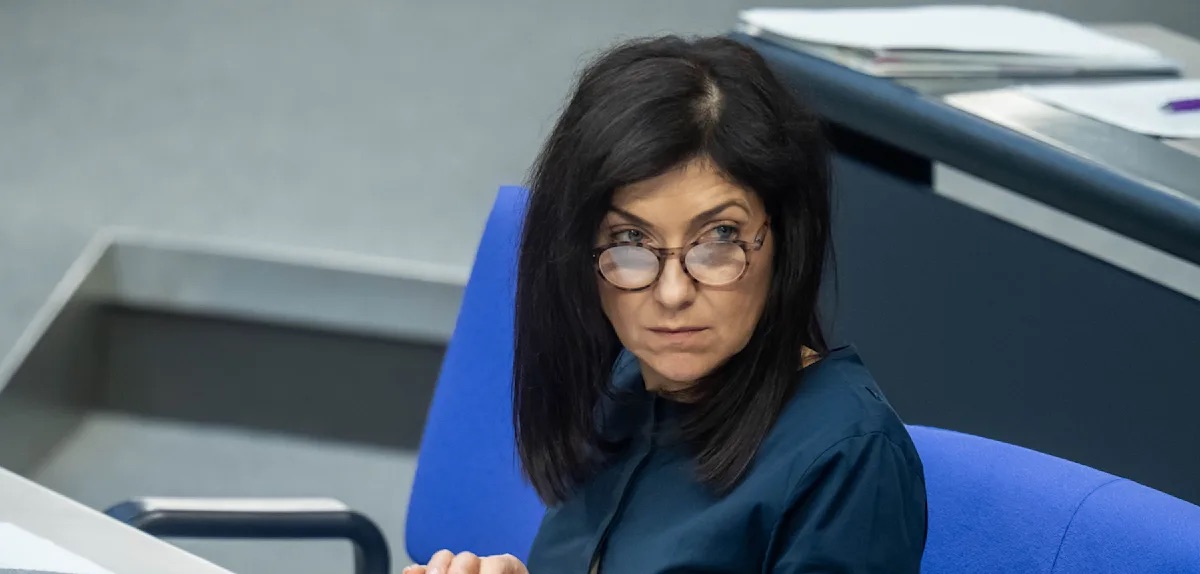
Her age on entering the Bundestag on 26 October 1998, a year after completing her chemistry degree.
Bundestag master dataLegislative periods served: the 14th, 15th, 16th, 17th and 18th electoral terms.
Bundestag master dataFour entries via the CDU's Brandenburg state list and one direct mandate, won in 2013.
Bundestag master dataHer margin of first votes over the SPD incumbent Andrea Wicklein in Wahlkreis 61 in 2013.
Constituency results, 2013Five legislative periods
Dates and mandate types come from the Bundestag's official member master data (MdB-Stammdaten). Constituency results are given only where the published figures could be checked; blanks are deliberate.
| Term | Dates (official) | Mandate | Constituency contested | Result |
|---|---|---|---|---|
| 14th 1998–2002 | 26.10.1998 – 17.10.2002 | State list, Brandenburg | WK 276 Potsdam | Seat won by Emil Schnell (SPD), 41.8%. Her own share: not verified |
| 15th 2002–2005 | 17.10.2002 – 18.10.2005 | State list, Brandenburg | WK 61 Potsdam – Potsdam-Mittelmark II – Teltow-Fläming II | Seat won by Andrea Wicklein (SPD), 41.1%. Her own share: not verified |
| 16th 2005–2009 | 18.10.2005 – 27.10.2009 | State list, Brandenburg | Same constituency (no. 61) | Third, 43,923 first votes |
| 17th 2009–2013 | 27.10.2009 – 22.10.2013 | State list, Brandenburg | Same constituency (then no. 62) | Third, 40,708 first votes |
| 18th 2013–2015 | 22.10.2013 – 04.09.2015 | Direct mandate | WK 61 Potsdam – Potsdam-Mittelmark II – Teltow-Fläming II | Won, 58,399 first votes (32.6%) |
Sources: Bundestag MdB-Stammdaten (file of 29 April 2026); constituency results as published for Wahlkreis 61 and the Landeshauptstadt Potsdam election statistics. List positions are not documented in the sources consulted.
From third place to a direct mandate
For most of her parliamentary career Reiche was a list member who also stood in the constituency. The arrangement reflected local strength: the SPD held the Potsdam seat in 1998, 2002, 2005 and 2009, and Die Linke finished second in both 2005 and 2009.
The figures show how far she climbed. In 2005 she finished third with 43,923 first votes, behind the SPD's Andrea Wicklein and Rolf Kutzmutz of Die Linke. In 2009 she was again third, with 40,708, but the top three were now separated by only about 8,000 votes.
In 2013 she won the seat with 58,399 first votes, or 32.6 per cent, 730 ahead of Wicklein. That was a gain of roughly 17,700 first votes on 2009.
Analysis The narrow margin made the 2013 seat a personal as well as a party win, and it gave her the strongest local base she ever had. She left parliament less than two years later.
-
26 October 1998
Entry via the Brandenburg list
She entered the 14th Bundestag via the CDU state list, having lost the Potsdam constituency (WK 276) to the SPD. The 1998 election ended sixteen years of government under Helmut Kohl, so she began her parliamentary career in opposition.
-
2001–2002
Bioethics: the stem-cell import debate
In the cross-party, free-vote debate on importing human embryonic stem cells, she co-initiated the most far-reaching motion with Wolfgang Schäuble, Rita Süssmuth and Friedbert Pflüger. It supported controlled imports for research. The position later fed directly into the controversy over her place in Edmund Stoiber's 2002 campaign team.
-
2002–2005
Chair, working group on education and research
In the 15th term she chaired the CDU/CSU working group on education and research. This made her the opposition group's lead voice on the policy field, facing the SPD–Green government of Gerhard Schröder.
-
November / December 2005 – 2009
Deputy chair of the CDU/CSU group
In the first grand coalition under Angela Merkel she became one of the deputy chairs of the parliamentary group under Volker Kauder. Her portfolio covered education and research, and environment, nature conservation and nuclear safety. German Wikipedia dates her election to 29 November 2005, while the Bundestag master data records the function from 12 December 2005; the difference probably reflects election versus formal registration.
-
October 2009
Coalition talks with the FDP
After the 2009 election she sat on the CDU/CSU–FDP negotiating group for environment, agriculture and consumer protection, led by Ilse Aigner and Michael Kauch. The coalition then made her parliamentary state secretary at the Federal Environment Ministry, a post she held alongside her mandate.
-
2009–2015
MP and state secretary
Parliamentary state secretaries are, as a rule, drawn from the Bundestag. From October 2009 to February 2015 she combined her seat with government office, first at the environment ministry and then at the transport ministry. Federal government roles
-
October 2012
Nomination contest for Potsdam
She won the CDU selection meeting for the 2013 election by 223 of 409 votes against Saskia Ludwig, who had shortly before stepped down as leader of the Brandenburg CDU and its state parliamentary group.
-
22 September 2013
Direct mandate
She won Wahlkreis 61 directly, the only time in five elections that she did not depend on the list.
List seat or direct seat: why it mattered
German voters cast two votes. The first elects a constituency member by simple plurality; the second, for a party list, determines each party's overall share of seats. Candidates commonly stand in both, so that a constituency defeat can still be followed by election via the list. For four elections that was Reiche's route into parliament: the Brandenburg CDU placed her high enough on its list that third place in Potsdam did not cost her the seat.
The difference has practical consequences. A list member who leaves parliament is normally replaced by the next candidate on the party list. A direct member is replaced the same way. In 2015, however, the Brandenburg CDU list had run out of eligible candidates, which is why her departure left the seat empty for two years rather than passing to a successor.
Party offices held in parallel
Her parliamentary career ran alongside offices in the CDU, which secured her nomination and list place. The details are on the CDU career page.
- 2000–2010, 2014–2016
- Member of the CDU federal executive; not re-elected in December 2016
- 2001–2015/16
- CDU Brandenburg state executive (sources differ on the end date)
- 8 July 2008
- Elected chair of the CDU Potsdam district association, 152 to 129 votes against Hans-Wilhelm Dünn
- 2011–2014
- Re-elected in Potsdam: narrowly in 2011 (97 to 91), with 73% in 2013 and 82.19% in 2014
- 9 September 2015
- Stepped down as district chair, days after leaving the Bundestag
What the record shows on committees
- 16th term
- Deputy member, Committee on Education, Research and Technology Assessment
- 16th term
- Deputy member, Committee on the Environment, Nature Conservation and Nuclear Safety
- 16th term
- Deputy member, Mediation Committee (Vermittlungsausschuss) of Bundestag and Bundesrat
- 14th, 15th, 17th, 18th
- Full committee memberships not documented in an official source consulted for this page
Source: Bundestag biography for the 16th electoral term (2008 snapshot).
As deputy group chair from 2005 to 2009, Reiche held no full committee seat. Members of the group leadership typically coordinate several committees' work rather than sit on one, which is why the 2008 biography lists only deputy memberships.
For the other terms, secondary sources point to the education and research committee, but this could not be confirmed in the Bundestag's own records, so it is not stated here as fact.
Disclosures in the official biographies
Members of the Bundestag publish paid and honorary functions alongside their biography. Reiche's entries show a profile weighted towards science, foundations and, by the 2010s, aviation and energy.
- Supervisory board, Cytolon AG, Berlin
- Board of trustees, AiF "Otto von Guericke"
- Robert Bosch Stiftung advisory board "Frauen in der Wissenschaft"
- Council of the Foundation for German-Polish Cooperation (until 29 November 2006)
- Member of the CDU federal executive
- Advisory board, Deutsche Flugsicherung (DFS), which she chaired as state secretary
- Board of trustees, Deutsches Museum
- Parliamentary advisory board, Bundesverband Deutscher Stiftungen
- Board of the Förderverein of a primary school in Luckenwalde and of the Katholische Marienschule Potsdam
The seat that stayed empty
Her departure became public on 2 February 2015, when it emerged that the Verband kommunaler Unternehmen (VKU) wanted her as its chief executive. She gave up her state secretary post in February 2015, when Norbert Barthle was appointed in her place, but kept her Bundestag seat until the end of 4 September 2015. She took up the VKU post on 1 September 2015.
- Mandate ended
- At the end of 4 September 2015 ("mit Ablauf des 4. September 2015")
- Successor
- None. The Brandenburg CDU list was exhausted, so under § 48(1) of the Federal Electoral Act the seat remained vacant
- Remaining list candidate
- Andrea Voßhoff did not take the seat, as it was incompatible with her office as Federal Data Protection Commissioner
- Vacancy
- From September 2015 until the 2017 election (Bundesanzeiger notice of 29 September 2015)
- 2017
- The constituency was won by Manja Schüle (SPD)
The timing drew criticism. The SPD's Ralf Stegner said members of the government should set an example on cooling-off periods. Transparency International and opposition parties raised possible conflicts of interest. The Bundestag passed a cooling-off law on 2 July 2015, but it did not apply to her switch, which had been agreed before the law took effect. The debate is analysed on the controversies page.
A minister without a seat
Reiche holds no seat in the current Bundestag. When she became Federal Minister for Economic Affairs and Energy on 6 May 2025, she joined the government without a parliamentary mandate; the Bundestag's master data, updated in April 2026, records no membership after 2015. The Basic Law does not require federal ministers to be members of parliament.
She now appears in the chamber on the government bench: answering to the economic affairs committee, introducing her ministry's bills and speaking in plenary debates such as the first reading of the 2027 renewable energy reform on 24 September 2026. That record is set out in the parliamentary work register.
Analysis Her years as an MP and parliamentary state secretary matter here. She knows the Bundestag's legislative procedure from the inside, from group working groups through coalition negotiations to the mediation committee. She now needs coalition majorities she is no longer part of.
- Deutscher Bundestag — MdB-Stammdaten (official member master data)
- Deutscher Bundestag — Biografie Katherina Reiche, 18th electoral term
- Deutscher Bundestag — Biografie, 16th electoral term (2008, archived)
- Deutscher Bundestag — Biografie, 15th electoral term (2004, archived)
- Wahlkreis 61 — constituency results 1998–2017
- VKU — Vita Katherina Reiche (2019, PDF)
- Der Spiegel, 1 July 2002 — stem-cell motion and campaign team
- Der Spiegel, 6 October 2009 — coalition negotiating groups
- Handelsblatt, 19 October 2012 — CDU nominates Reiche
- Tagesschau, 2 February 2015 — Reiche moves to the VKU (archived)
- VerkehrsRundschau, February 2015 — SPD criticises the switch
- VerkehrsRundschau, 12 February 2015 — Barthle appointed
- LobbyControl, 3 July 2015 — cooling-off law passed (PDF)
- Clean Energy Wire — Merz's surprise pick (no Bundestag seat)
- Deutscher Bundestag text archive, 24 September 2026 — EEG reform first reading
- PNN, 7 December 2016 — not re-elected to the federal executive
- Tagesspiegel, April 2011 — re-elected Potsdam CDU chair
- rbb, September 2015 — steps down as district chair (archived)