Who decides what in German energy policy
German energy policy rests on a small number of federal laws and one powerful regulator. The Renewable Energy Sources Act (EEG) governs support for wind, solar and other renewable generators. The Energy Industry Act (EnWG) sets the rules for electricity and gas networks and supply. The Federal Network Agency (Bundesnetzagentur, BNetzA) regulates the grids, approves transmission lines and the hydrogen core network, and runs the tenders for renewables and new power plants. The ministry drafts the laws, the Bundestag and Bundesrat pass them, and in many areas the European Commission must approve the support schemes under state-aid rules.
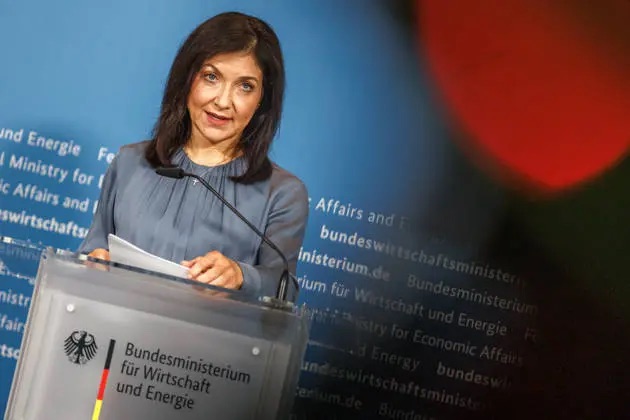
Verified fact The Chancellor's organisational decree of 6 May 2025 renamed the Federal Ministry for Economic Affairs and Climate Action (BMWK) the Federal Ministry for Economic Affairs and Energy (BMWE) and moved several areas out of it:
| Area | Moved to | Decree section |
|---|---|---|
| Climate protection and climate partnerships | Environment, Climate Action, Nature Conservation and Nuclear Safety ministry (BMUKN) | IX.1 |
| Transformation policy | Federal Ministry of Finance | III.2 |
| Space, innovation and technology policy, SPRIND, gigafactories | Research, Technology and Space ministry (BMFTR) | X.1 |
| Digital policy, better regulation, digital economy | New Ministry for Digital Affairs and State Modernisation | XII.4 |
Source: Organisationserlass des Bundeskanzlers, 6 May 2025 (BGBl. 2025 I Nr. 131).
Analysis The split matters for how her record is read. Energy supply, prices, grids, the EEG and power plants stayed with Reiche. Climate targets and the climate-protection programme now sit with the environment ministry. Disagreements between the two houses, for example over the EU methane regulation in mid-2026, therefore play out between ministers of different parties. The climate side is covered on Climate & Transition.