21Archive · Record

The record, with its limitations

Fourteen milestones from Katherina Reiche's career in parliament, industry and government, each logged the same way: when it happened, what she was responsible for, what she did, what resulted, why it matters and where it falls short. This is a ledger, not a tribute: results that are disputed or incomplete are recorded as such.

Entries14
Span1998–2026
StatusAs of October 2026
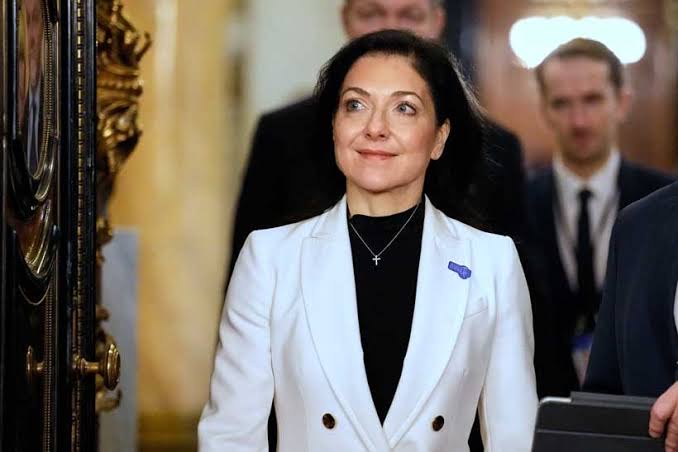
Katherina Reiche in a white blazer at an event
Katherina Reiche in a white blazer at an event.

What counts as an achievement here

An entry qualifies if it is a documented office won, a function held at the top of an organisation, a formal honour, or a law or measure that was adopted under her responsibility. Adoption is not the same as success: several of the 2025–2026 measures have only just taken effect, and their effects cannot yet be measured. Where a result belongs to a cabinet, a coalition or a company rather than to her personally, the Responsibility line says so.

  1. 1998Bundestag at 25
  2. 2005Deputy group chair
  3. 2013Direct mandate
  4. 2018Coal commission
  5. 2020Westenergie
  6. 2020Hydrogen Council
  7. 2021Mestemacher Prize
  8. 2025MCI professorship
  9. 2025CO₂ storage law
  10. 2026Price relief
  11. 2026Industrial power price
  12. 2026Capacity law
  13. 2026Heating law
  14. 2026Hydrogen acceleration
Part I · Parliament, 1998–2015

Mandates and leadership

011998Office

Entry into the Bundestag at 25

Period
26 October 1998, start of the 14th electoral term
Context
A CDU member for only two years, she was a research associate at the University of Potsdam when the Kohl government lost power
Responsibility
Candidate on the CDU Brandenburg state list and in the Potsdam constituency
Action
Stood in Wahlkreis 276 Potsdam and on the list
Result
Elected via the list; re-elected in 2002, 2005 and 2009
Significance
The start of a seventeen-year parliamentary career for an east German born under the GDR
Limitations
She lost the constituency to the SPD's Emil Schnell; her own vote share and list position are not documented. Her seat depended on the party list, not on a personal local majority.
022005Leadership

Deputy chair of the CDU/CSU parliamentary group

Period
Late 2005 – 2009 (16th electoral term)
Context
First grand coalition under Angela Merkel; group chair Volker Kauder. She had chaired the group's education and research working group from 2002
Responsibility
Coordinating the group's work on education and research, and on environment, nature conservation and nuclear safety
Action
Led two policy portfolios within the group leadership; deputy member of the Mediation Committee
Result
A position in the group's leadership team at 32
Significance
Brought her into environment and nuclear policy, the base for her later state secretary post
Limitations
The group's leadership had several deputy chairs; individual results of her coordination are not documented. Her positions then, for longer nuclear lifetimes, were later reversed by her own vote in 2011.
032013Office

Direct mandate in Potsdam

Period
Nomination October 2012; election 22 September 2013
Context
Third place in the same constituency in 2005 and 2009; a contested nomination against former state party leader Saskia Ludwig
Responsibility
Personal candidacy
Action
Won the CDU selection meeting by 223 of 409 votes, then the constituency
Result
58,399 first votes (32.6%), 730 ahead of the SPD incumbent Andrea Wicklein
Significance
Her only direct mandate, gained with about 17,700 more first votes than in 2009
Limitations
She left the seat after less than two years for an industry post. With the state list exhausted, the constituency had no member from September 2015 until 2017.
Part II · Industry, 2015–2025

Associations, companies, councils

042018Appointment

Member of the coal commission

Period
June 2018 – January 2019
Context
The federal Commission on Growth, Structural Change and Employment was set up to agree a path out of coal power
Responsibility
Member, as chief executive of the municipal utilities association VKU
Action
Took part in the commission's deliberations and its final report
Result
The commission recommended ending coal power by 2038 at the latest; the 2020 Coal Phase-out Act adopted that date
Significance
Placed her at one of the central compromises of German energy policy
Limitations
One member among many; her individual contribution and positions within the commission are not documented in the sources consulted.
052020Leadership

Chief executive of Westenergie

Period
1 January 2020 – May 2025
Context
After E.ON's takeover of innogy, the western grid business became Westenergie, E.ON's largest subsidiary, headquartered in Essen
Responsibility
Chair of the management board
Action
Led a group whose grid companies run about 196,000 km of power lines and 37,000 km of gas network, with about 11,000 employees (company figures, 2024)
Result
Its subsidiary Westnetz carried out H2HoWi in Holzwickede (October 2022 – end 2023), the first conversion of a public gas line in Germany to 100% hydrogen
Significance
Operational experience of the distribution grids that connect most renewable plants
Limitations
Company results cannot be attributed to her personally. The role is the main basis of conflict-of-interest criticism since 2025, and she was listed in Westenergie's lobby-register entry until she became minister.
062020Appointment

Chair of the National Hydrogen Council

Period
June / July 2020 – May 2025
Context
The council was created with the National Hydrogen Strategy of June 2020 as an independent advisory body of 25 experts
Responsibility
Elected chair; Robert Schlögl deputy
Action
Led the council's recommendations; in March 2021 publicly criticised the government's slow implementation
Result
The strategy was revised in 2023 and the electrolysis target doubled to 10 GW by 2030
Significance
Made her the most visible industry voice on hydrogen
Limitations
An advisory role only. Electrolysis capacity in operation was 181 MW in early 2026, far short of the target, which her ministry has since dropped.
072021Honour

Mestemacher Prize "Managerin des Jahres"

Period
2021
Context
A private award for women in management, given by the Mestemacher company
Responsibility
Recipient, as Westenergie chief executive
Action
—
Result
Named "Manager of the Year"
Significance
Recognition of a woman leading a large German grid company
Limitations
A corporate prize, not a state honour. No federal or state order of merit is documented.
082025Honour

Honorary professorship, MCI Innsbruck

Period
April 2025
Context
She had chaired the advisory board of MCI | Management Center Innsbruck
Responsibility
Recipient
Action
—
Result
Title of honorary professor (Prof. h.c.)
Significance
Academic recognition shortly before she took office
Limitations
An honorary title, not an academic appointment. She holds a chemistry diploma (1997) but no doctorate.
Part III · Ministry, since 2025

Laws and measures adopted

092025Law

CO2 storage law (KSpG amendment)

Period
Cabinet 6 August 2025; Bundestag 6 November; in force 28 November 2025
Context
Industries such as cement and lime have process emissions that cannot be avoided by switching fuel
Responsibility
Lead ministry: BMWE
Action
Amended the Carbon Dioxide Storage Act to allow industrial-scale offshore storage
Result
Storage permitted on the continental shelf and in the exclusive economic zone; marine protected areas and coastal waters excluded
Significance
Opens a route for industries with unavoidable emissions; she called it an important milestone
Limitations
The law enables storage but does not build it: pipelines, terminals and storage sites still have to be developed and financed.
102026Measure

Energy price relief package

Period
In force from 1 January 2026
Context
German non-household electricity prices among the highest in the EU
Responsibility
A government package; tax elements lie with the finance ministry
Action
Gas storage levy abolished; €6.5 bn subsidy for transmission-grid fees; electricity tax for manufacturing, agriculture and forestry cut to the EU minimum
Result
About €10 bn a year in relief by the government's estimate; about €160 a year for an average household
Significance
The first measurable relief on energy costs of her term
Limitations
Households and small businesses were excluded from the tax cut. The grid-fee subsidy is planned to fall to €5.525 bn a year for 2027–2029.
112026Measure

EU approval of the industrial electricity price

Period
Approved 16 April 2026; retroactive to 1 January 2026
Context
Energy-intensive production fell 15.2% between February 2022 and March 2026
Responsibility
BMWE, negotiating with the European Commission
Action
Secured approval under the CISAF state-aid framework
Result
€3.8 bn for 2026–2028; target price 5 ct/kWh; about 9,500 eligible companies in 91 sectors
Significance
In her words, the first framework of its kind in Germany
Limitations
Applications for 2026 open only in 2027; aid covers at most half a company's consumption; half must be reinvested. The chemical association VCI called it "zu gering".
122026Law

Capacity law and the first auction

Period
EU agreement 15 January 2026; Bundestag 9 July 2026; first auction closed 8 September 2026
Context
Coal exit by 2038 and the need for firm backup capacity
Responsibility
Lead ministry: BMWE
Action
Negotiated the power plant strategy with Brussels and steered the StromVKG through parliament
Result
12 GW of hydrogen-ready capacity, storage and flexibility; a 4,500 MW auction "significantly oversubscribed"; up to €35 bn of support approved by the EU
Significance
The central instrument for firm capacity alongside the coal exit
Limitations
Scaled down from her initial 20 GW. Awards are due only by 3 November 2026 and plants by 2031. The Bundeskartellamt said the draft favoured gas and existing sites; EnBW's ministry-requested proposals drew criticism.
132026Law

Building Modernisation Act (heating law)

Period
Cabinet 13 May 2026; Bundestag and Bundesrat 10 July; in force in parts from 29 July 2026
Context
The previous rules required new heating systems to use 65% renewable energy
Responsibility
Joint with Building Minister Verena Hubertz (SPD)
Action
Replaced the 65% renewables rule with free choice of system and a rising bio-fuel quota from 2029
Result
Law passed before the summer recess; cost risks shared equally between landlords and tenants
Significance
Reverses the core requirement of the previous government's heating rules
Limitations
The Regulatory Control Council called it one of the weakest proposals in years; the Bundestag research service raised constitutional doubts; Deutsche Umwelthilfe called it "klimapolitisch katastrophal".
142026Law

Hydrogen Acceleration Act

Period
Cabinet October 2025; Bundestag 26 February 2026; published 1 April 2026
Context
A 9,040 km hydrogen core network approved in 2024, about 525 km completed in 2025
Responsibility
Lead ministry: BMWE
Action
Classified hydrogen infrastructure as of overriding public interest; digital permitting with deadlines
Result
Faster approval rules for electrolysers, pipelines and storage
Significance
Turns her hydrogen-council demand for speed into permitting law
Limitations
Permitting is not the only bottleneck: demand and costs are. The fixed 10 GW target was dropped without a published replacement as of January 2026.
Balance

What the ledger adds up to

Analysis The parliamentary entries show a fast rise and an early exit. The industry entries show senior roles whose outcomes belong largely to organisations. The ministerial entries are where her personal responsibility is clearest, and they are also the most recent: five laws and two relief measures in eighteen months, most of which take full effect only from 2026 or 2027.

Measured by legislative output, the record is substantial. Measured by outcomes such as prices, emissions, new plants and hydrogen output, it is too early to judge. Critics argue that several measures favour incumbents she once worked for; supporters credit them with restoring cost discipline. Both claims are set out on the controversies and major initiatives pages.