22Policy & Archive · Balanced analysis

Controversies & criticism

Sixteen disputes from 2002 to 2026, each set out in the same way: what happened, who objected and why, what she said in reply, and what followed.

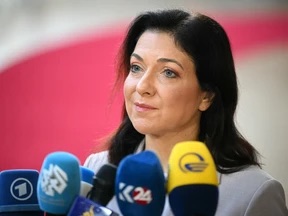
Katherina Reiche facing a cluster of broadcaster microphones
Facing a cluster of broadcaster microphones.
Method

Allegations are reported, not adopted

This page records criticism as criticism: it names who made it, when and where. Where she or her ministry responded, the response is given. Where no response is documented, that is stated rather than assumed. Where supporters defended her, they are included. Nothing here implies wrongdoing that no authority has found.

Several items are based on press reports that could only be checked through secondary citations, mostly German Wikipedia's references to Der Spiegel, FAZ and Tagesschau. They are marked "as cited by".

Verified factPolitical positionAnalysisCriticism
Sixteen disputes at a glance
WhenDisputeMain critics
2002Stoiber campaign teamCatholic bishops, conservative Union politicians
2012Civil partnershipsEquality advocates, online public
2015Move to VKU, cooling-offSPD, Transparency International, LobbyControl
2025Appointment and complianceLobbyControl, Greens
2025"Work more and longer"CDA, SoVD, SPD
2025–26Rooftop solar supportSolar industry, Greens, SPD ministers
2025Monitoring report textsGreens, Campact, BUND, Greenpeace
2026Gas plants and EnBWLobbyControl, storage industry, Bundeskartellamt
2026"Kein Gasgeschäft"t-online, cleanthinking.de
2026Heating lawNormenkontrollrat, DUH
2025–26Tirol summitGreens, Die Linke
2026Clash with the SPDCDA, SPD
2026Dropped report indicatorsSustainability researchers
2026INSM videoPress, opposition
2026EU methane rulesEnvironment Minister Schneider
2026Die Linke court motionDie Linke
Part I · Before office

Before ministerial office

July 2002

The Stoiber campaign team and her family-policy brief

Documented

Background For the federal election of 22 September 2002, the CDU/CSU chancellor candidate Edmund Stoiber assembled a campaign "Kompetenzteam" including Lothar Späth, Friedrich Merz, Annette Schavan and Wolfgang Schäuble. Reiche, then 28, was to give the team a face that Der Spiegel described as "jung, weiblich, ostdeutsch und protestantisch" (young, female, east German and Protestant).

What happened She was originally to cover family policy. Church circles and conservative Union politicians objected, and in early July 2002 "family" was removed from her brief. She became responsible for youth and women's policy instead.

Main criticism · who

The objections centred on her being an unmarried mother expecting her second child, and on her support for embryonic stem-cell research. According to Der Spiegel (10 July 2002), the German Bishops' Conference intervened with the Union leadership. Cardinal Joachim Meisner of Cologne suggested the party drop the "C" from its name. The SPD women's association mocked what it called her "Degradierung" (demotion).

Her response · supporters

She initially made no public comment, then stayed on the team. She announced that she would marry her partner, Sven Petke, but would not have the date dictated to her. Stoiber defended her: "Sie hat meine volle Rückendeckung und die Qualifikation für ein Ministeramt" (she has my full backing and the qualifications for ministerial office). CDU leader Angela Merkel noted that there was no single opinion in the Catholic Church either.

Political context

The Union was trying to win over younger and eastern voters, while the Bundestag had just fought out the stem-cell import question, in which she backed the most permissive motion.

Consequences

Her brief was narrowed. The episode made her nationally known at 28 and became a test of how far the Union would accept modern family life.

Subsequent developments

Her second daughter was born on 26 August 2002. The Union lost the election, so the team never governed. She married in 2003.

July 2002 · August 2012

Civil partnerships and marriage

Political position

Background In July 2002, in the middle of the campaign-team dispute, she said she supported the constitutional challenge by Bavaria, Saxony and Thuringia against the new civil partnership law. Der Spiegel quoted her calling the law an "Angriff auf Ehe und Familie" (attack on marriage and the family).

What happened In August 2012, while she was a state secretary, she wrote in Bild against giving civil partnerships equal status with marriage. This came as the FDP justice minister Sabine Leutheusser-Schnarrenberger was pressing for equal treatment.

Main criticism · who

The Süddeutsche Zeitung reported a "Wutsturm" (storm of outrage) against her, much of it online, from supporters of equal rights for same-sex couples.

Her response · position

Her article set out her opposition to equal status, and no retraction followed. She took her Facebook page offline for a time. No later statement revising the position is documented in the sources used here.

Political context

The CDU/CSU–FDP coalition was divided on the issue, with the liberal partner pressing for equality.

Consequences

The episode fixed her public image as a socially conservative voice, which seemed at odds with the 2002 debate about her own family life.

Subsequent developments

Analysis Since 2015 her public profile has been almost entirely about energy and economic policy, and the issue has not featured in her ministerial record.

February – September 2015

From the ministry to the municipal utilities lobby

Criticism

Background In 2015 the government was preparing a law on cooling-off periods for ministers and parliamentary state secretaries who move into business, after earlier high-profile cases involving other politicians.

What happened On 2 February 2015 it became known that Reiche, then Parliamentary State Secretary in the transport ministry, would become chief executive of the Verband kommunaler Unternehmen (VKU), the association of municipal utilities. She was elected in February, her successor as state secretary was appointed on 11 February, and she took up the VKU post on 1 September. She remained a member of the Bundestag until 4 September 2015.

Main criticism · who

SPD deputy leader Ralf Stegner said government members should be role models on cooling-off periods, rather than testing "what might just about still be possible". Transparency International and opposition parties pointed to possible conflicts of interest. According to Clean Energy Wire, LobbyControl said that changing sides without a waiting period was "unacceptable".

Her response · position

Her documented statements are limited to her appointment. She named energy, climate and environmental policy, security of supply and public services as her interests. No direct rebuttal of the criticism has been found.

Political context

The cabinet was due to adopt the cooling-off bill on 4 February 2015. LobbyControl and Transparency International demanded three years with sanctions instead of the 12–18 months proposed.

Consequences

The Bundestag passed the law on 2 July 2015. LobbyControl called it a positive but half-hearted step. According to secondary reporting, the new rules did not apply to her case, because her move was agreed before they took effect.

Subsequent developments

She resigned as CDU Potsdam district chair on 9 September 2015. The episode was cited again when she became minister in 2025, this time in reverse: from industry back into government.

Part II · Independence

As minister: interests and independence

April – August 2025

The appointment, conflict-of-interest concerns and Drucksache 21/1136

Criticism

Background Until 2025 Reiche was chief executive of Westenergie, E.ON's largest subsidiary and a major distribution-grid operator. She was listed in Westenergie's lobby-register entry until she became minister. On 25 April 2025 she joined the board of the Swedish battery-storage company Ingrid Capacity. She also sat on Schaeffler's supervisory board.

What happened Friedrich Merz presented her as minister-designate on 28 April 2025, three days after the Ingrid Capacity appointment, and she was sworn in on 6 May. The Greens then submitted a parliamentary question on her compliance arrangements. The government answered on 4 August 2025 in Drucksache 21/1136.

Main criticism · who

LobbyControl (28 April 2025): "Mit Frau Reiche wird eine Energieunternehmerin zur Energieministerin gemacht" (an energy executive is being made energy minister). It added that it was "höchst fraglich" (highly questionable) whether she could keep the necessary critical distance from the energy industry. Christina Deckwirth of LobbyControl spoke of a clear case of a conflict of interest, pointing to Westenergie's interest in connecting to the hydrogen core network. The Greens criticised her first speech as minister, at a summit sponsored by Westenergie. abgeordnetenwatch objected when the ministry first sought up to €4,000 in fees for documents on eight energy-lobby meetings, later reduced to €500.

The government's answer · supporters

The government stated: "Die Bundesministerin Katherina Reiche hat vor Amtsantritt alle früheren beruflichen Tätigkeiten und Mandate beendet" (she ended all previous professional activities and mandates before taking office). She disclosed, voluntarily, a share in a family company holding land in Brandenburg and her Ingrid Capacity options of about €3,000, which were sold by August 2025. She holds no Westenergie or E.ON share instruments. No blind trust or walling-off was ordered. Whether she must abstain from decisions affecting former employers was called "hypothetical". In April 2026 the ministry said the legal rules on conflicts of interest were "selbstverständlich" (of course) being followed. Industry federations including BDI, BDEW and the renewables federation BEE, and the economist Veronika Grimm, welcomed her appointment.

Political context

Merz chose an experienced energy manager, from eastern Germany, who had been out of party politics for a decade. Clean Energy Wire called her his "surprise pick".

Consequences

No formal recusal from E.ON matters is documented. The general rules of Article 66 of the Basic Law and the Federal Ministers Act apply, and the ministry has no additional compliance rules for the minister.

Subsequent developments

The question returned with the monitoring report, the EnBW contacts and her April 2026 remark on Westenergie's gas business (below).

September – December 2025

The monitoring report: overlaps and edits

Allegation

Background On 15 September 2025 she presented an external monitoring report on the energy transition by EWI and BET, together with a ten-point plan of her own. See the case study.

What happened On 24–25 September 2025 the Berliner Zeitung, Table.Media and the Tagesspiegel reported that the ten-point plan overlapped, in places word for word, with position papers by RWE and E.ON. On 16 December 2025 Greenpeace alleged 28 changes between the experts' draft and the published report.

Main criticism · who

The Greens, the campaign group Campact and the environmental association BUND raised the overlap reports. Karsten Smid of Greenpeace described "subtle substantive interventions that go far beyond editorial changes" (as reported by taz).

Her response · supporters

According to taz, the ministry had made no statement on the Greenpeace analysis by its deadline. No detailed public reply to the overlap reports is documented in the sources used here. On publication, BDI called the report a "notwendige, vorbehaltlose Bestandsaufnahme" and BEE called its analysis "intensive, stimmige und substanzielle".

Political context

Before publication, Deutsche Umwelthilfe and the Greens had warned that the review was designed to justify slowing renewables.

Consequences

The allegations fed the broader conflict-of-interest debate but did not stop the plan, which became the basis of later legislation.

Subsequent developments

Measures from the plan, including the end of fixed tariffs for new rooftop solar and the capacity market, entered legislation in 2026.

January – May 2026

Gas power plants and the EnBW lobbying report

Criticism

Background Reiche sought at least 20 GW of new gas-fired plants. EU state-aid concerns reduced this to 12 GW in the agreement with the Commission of 15 January 2026.

What happened On 15 April 2026 Der Spiegel reported that on 13 January 2026 EnBW's chief lobbyist had sent the ministry proposals for the auction design that would disadvantage battery storage, for example a ten-hour continuous-operation requirement. EnBW said the message was written at the ministry's request. It was entered in the lobby register only after Spiegel's inquiry. Reports also mentioned a similar request to RWE.

Main criticism · who

LobbyControl called her one-sided closeness to the gas lobby "no longer acceptable" and demanded that she explain what role the requested arguments had played. In May 2026 the Bundeskartellamt criticised the draft capacity law for favouring existing plant sites and gas.

The ministry's response

According to the reports, the ministry did not deny the request. It said compliance with the lobby register was the lobbyist's responsibility. Political position Reiche has consistently argued that Germany needs dispatchable gas plants for long periods without wind and sun.

Political context

Battery-storage companies were competing with gas plants for capacity payments. Auction design decides which technology wins.

Consequences

The StromVKG passed the Bundestag on 9 July 2026, providing for hydrogen-ready plants, storage and flexible loads.

Subsequent developments

The Commission approved up to €35 billion on 2 September 2026, as reported by Tagesschau. The first auction was significantly oversubscribed. Case study

April 2026

"Kein Gasgeschäft": the Westenergie statement

Contested statement

Background Critics had linked her gas-plant policy to her former employer since 2025. An energate report of June 2025 ran under the headline "Shaped by the gas lobby?".

What happened At the press conference on the spring projection in late April 2026, she said: "Das Geschäftsfeld der Westenergie umfasst kein Gasgeschäft" (Westenergie's business does not include gas business) and "Ich war nie in der Gaslobby tätig" (I was never active in the gas lobby).

Main criticism · who

t-online and cleanthinking.de pointed out that Westnetz, a Westenergie subsidiary, operates a large gas distribution network. In Westenergie's own 2024 statement to the NRW Landtag, its group grid operators ran about 37,000 km of gas network.

The ministry's response

Asked by cleanthinking.de, the ministry replied, as reported, that the minister's words spoke for themselves. Analysis The disagreement may turn on what counts as "gas business": operating a regulated gas network versus trading or selling gas. No clarification of that kind is documented.

Political context

The remark came days after the EnBW report and during the clash with the SPD over a windfall tax.

Consequences

It renewed calls from transparency groups for clearer recusal rules. No formal consequence followed.

Subsequent developments

Tagesschau also reported the remark on 27 April 2026. The wider conflict-of-interest debate continues.

October 2025 – January 2026

The Tirol "Moving MountAIns" summit

Criticism

Background Her relationship with the CSU politician Karl-Theodor zu Guttenberg was confirmed publicly through their lawyer in April 2025. This page addresses it only because it became a political issue in this case.

What happened In October 2025 Guttenberg and the former Austrian chancellor Sebastian Kurz co-organised a private summit for invited guests in Seefeld, Austria. Reiche attended, and the event brochure listed her as "Her Excellency … Minister".

Main criticism · who

The Green MP Michael Kellner: "Jede Wurstbude in Deutschland hat klarere Compliance-Regeln" (every sausage stand in Germany has clearer compliance rules). Janine Wissler (Die Linke) also criticised her. Sebastian Roloff of the coalition partner SPD urged "Fingerspitzengefühl" (sensitivity).

The ministry's response

"Frau Reiche hat nicht in ihrer Funktion als Bundesministerin teilgenommen" (Ms Reiche did not attend in her capacity as federal minister), the ministry told zdfheute. The government confirmed this in a parliamentary answer in December 2025. According to a LobbyControl summary, she said she gave no speech and only listened; the original wording is unconfirmed.

Political context

The episode raised the question of where a minister's private capacity ends when a brochure lists her by title.

Consequences

She was questioned in the Bundestag economic affairs committee. The coalition blocked a public session.

Subsequent developments

zdfheute reported on the case again in January 2026. No further proceedings are documented.

Part III · Policy disputes

As minister: policy disputes

25 July 2025

"Work more and longer"

Political position

Background The coalition agreement favours flexible transitions into retirement, not a higher statutory pension age.

What happened In a FAZ interview reported on 25–26 July 2025, she said: "Die Lebensarbeitszeit muss steigen" (working lifetimes must increase), and that it could not work in the long run "dass wir nur zwei Drittel unseres Erwachsenenlebens arbeiten und ein Drittel in Rente verbringen" (that we work only two-thirds of our adult lives and spend a third in retirement). She compared about 1,340 annual working hours in Germany with about 1,800 in the US.

Main criticism · who

Christian Bäumler of the CDU's labour wing (CDA) called her a "Fehlbesetzung" (wrong choice for the job) for not recognising that low average hours reflect high part-time work. The social association SoVD warned against raising the retirement age "by the back door". Labour Minister Bärbel Bas (SPD) said many workers already cannot reach the current pension age for health reasons.

Her response · supporters

She defended her position in late July 2025. In November 2025 she repeated it, warning that the statutory pension would not be enough to live on for younger cohorts. Employers' president Rainer Dulger ("Rendezvous mit der Realität") and the economist Martin Werding supported her.

Political context

Pensions are the labour ministry's responsibility, so an economics minister's call for longer working lives crossed a coalition line.

Consequences

The remarks defined her early public image beyond energy and made her a target of the CDA.

Subsequent developments

The cabinet set up a pension commission in December 2025.

August 2025 – September 2026

Ending feed-in tariffs for rooftop solar

Political position

Background As a state secretary in 2012 she had defended cuts to solar support. In 2025 small rooftop systems were still entitled to fixed feed-in tariffs.

What happened On 11 August 2025 she told the Augsburger Allgemeine that new small solar systems already paid for themselves and needed no support. A ministry draft of 26 February 2026 ended the fixed tariff for new systems up to 25 kW. A softened version with a transition payment followed in July 2026.

Main criticism · who

The solar association BSW-Solar said the plan "würde die Klimaziele gefährden" (would endanger the climate targets). The Green MP Sven Giegold and Philipp Schröder, chief executive of the installer 1Komma5°, also objected. The SPD ministers Lars Klingbeil and Carsten Schneider objected to the February draft. BDEW criticised a three-day consultation. Michael Kellner (Greens) called the related grid package "eine Gefälligkeit für E.ON".

Her response · position

"All das macht unser Stromsystem unnötig teurer. Das will ich ändern." (All this makes our power system unnecessarily expensive. I want to change that.) At the cabinet decision she said: "Wir beenden das EEG als Rundum-sorglos-Paket" (we are ending the EEG as an all-inclusive, worry-free package).

Political context

The EU approval of the current EEG expires at the end of 2026, so reform was needed anyway. The dispute was over how far it should go.

Consequences

Coalition pressure produced a 36-month transition payment and a four-year direct-marketing bonus.

Subsequent developments

The bill had its first reading on 24 September 2026; final votes are expected in November. Case study

May – July 2026

The heating law and the regulatory-control council

Criticism

Background The coalition had promised to replace the 2023 heating rules, which required new systems to use 65 per cent renewable energy.

What happened The Building Modernisation Act, drafted with Building Minister Verena Hubertz (SPD), was adopted by the cabinet on 13 May 2026. It abolishes the 65 per cent rule and introduces a rising quota of climate-friendly fuels from 2029.

Main criticism · who

Lutz Goebel, chair of the Normenkontrollrat, called it one of the "handwerklich schwächsten und praxisfernsten Vorhaben" (most poorly drafted and impractical projects) the council had seen in years. Deutsche Umwelthilfe called it "klimapolitisch katastrophal". In June 2026 the Bundestag's research service raised doubts about its constitutionality and compatibility with EU law, as reported by Der Spiegel.

Her response · position

The ministries presented it as replacing a law that had unsettled many people with one based on trust, technology openness and feasibility. The government rejected the changes proposed by the Bundesrat.

Political context

The 2023 law had been among the most contested measures of the previous coalition, and the new coalition had agreed to replace it.

Consequences

Passed by the Bundestag and the Bundesrat on 10 July 2026, and in force in parts from 29 July.

Subsequent developments

No court challenge is documented as of October 2026. Case study

April 2026

The windfall-tax clash with the SPD

Political position

Background The Hormuz energy shock sent fuel and gas prices sharply higher in spring 2026.

What happened Finance Minister Lars Klingbeil (SPD) floated a tax on windfall profits. Reiche called the idea expensive, ineffective and constitutionally questionable.

Main criticism · who

Christian Bäumler (CDA) called for her dismissal, according to Tagesschau/SWR on 11 April 2026, as cited by German Wikipedia. The Chancellor's circle urged restraint.

Her position · supporters

She held to her rejection of the tax. Junge Union leader Johannes Winkel and Hildegard Müller, president of the automotive association VDA, backed her (FAZ, 12 April 2026, as cited by German Wikipedia).

Political context

The dispute fell between the fuel-price law of March and the tax cut on fuel from May, measures she had promoted instead.

Consequences

The dispute exposed open tension between the two coalition partners in the middle of the price shock.

Subsequent developments

Der Spiegel reported in July 2026 that Merz held "a kind of second job interview" with her before a reshuffle and that she kept her post. This report could not be checked directly.

June – July 2026

The EU methane regulation

Political position

Background The EU methane regulation sets rules on methane leaks in the oil and gas sector, with requirements that reach imported fuels. Most of Germany's LNG now comes from the United States.

What happened In June and July 2026 Reiche pushed for a looser implementation of the regulation.

Main criticism · who

Environment Minister Carsten Schneider (SPD) publicly rebuked her, according to Handelsblatt (25 June 2026) and Der Spiegel (8 July 2026), as cited by German Wikipedia.

Her position

Analysis Her push is consistent with her emphasis on supply security and cost. No verbatim statement of her reasoning is documented in the sources used here.

Political context

Climate policy moved to the environment ministry in 2025, so two SPD- and CDU-led ministries now share Germany's line in Brussels.

Consequences

The episode showed open disagreement within the government on an EU climate file.

Subsequent developments

No change to the regulation is documented as of October 2026. International context

May 2026

Dropping the welfare indicators

Criticism

Background Under Robert Habeck the ministry's annual economic reporting had added social and ecological indicators alongside GDP.

What happened In 2026 the ministry dropped these indicators, as the Frankfurter Rundschau reported on 6 May 2026.

Main criticism · who

Roland Zieschank of the IZT institute called the step "Ausdruck des Politikversagens" (an expression of policy failure).

Her response

No public justification by the minister is documented in the sources used here.

Political context

The ministry's growth forecasts fell from 1.3 per cent (October 2025) to 0.5 per cent (April 2026) for 2026.

Consequences

The change narrowed the official measure of economic progress back to conventional indicators.

Subsequent developments

None documented as of October 2026.

Part IV · Communication

As minister: communication and neutrality

23 May 2026

Sharing an INSM campaign video

Criticism

Background The Initiative Neue Soziale Marktwirtschaft (INSM) is a lobby group funded by employers.

What happened On 23 May 2026 the ministry reposted an INSM campaign video on its channels.

Main criticism · who

Der Spiegel (26 May 2026) and Merkur reported criticism that a ministry was amplifying an interest group's campaign, as cited by German Wikipedia.

The ministry's response

No statement is documented in the sources used here.

Political context

Government communication must stay politically neutral and must not serve partisan or interest-group campaigns.

Consequences

The case raised questions about the ministry's social-media practice.

Subsequent developments

A second social-media case in September 2026 went to the Constitutional Court (below).

September – October 2026

Die Linke's motion at the Constitutional Court

Pending

Background Government communication paid for with public resources is subject to a duty of neutrality towards political parties. Die Linke's motion rests on that principle.

What happened On 23 September 2026, after the Berlin state election, the ministry published an Instagram video attacking Die Linke. The party filed an emergency motion with the Federal Constitutional Court.

Main criticism · who

Die Linke argues that the video breaches the state's duty of neutrality.

The ministry's response

The ministry describes the video as an extension of a speech by the minister on Germany as a place to invest (t-online, updated 5 October 2026).

Political context

The video followed a state election in which Die Linke featured prominently.

Consequences

The matter is before the court.

Subsequent developments

Pending as of 7 October 2026. No ruling had been reported.

Assessment

Patterns, weighed

Analysis The disputes fall into three groups. The earliest (2002, 2012) concerned her social conservatism and, ironically, her own family life. The second group, from 2015 to the EnBW and "kein Gasgeschäft" episodes of 2026, concerns the boundary between government and the energy industry. That is the most persistent line of criticism, and transparency groups and the Greens have pursued it consistently. No authority has found a breach of the rules. The government's position is that the general statutory rules apply and are being followed. Critics argue that those rules are too weak for a minister with her background.

The third group concerns policy direction (rooftop solar, gas plants, the heating law, methane rules) and how the ministry communicates. Here the criticism is political rather than ethical. Industry associations, employers' groups and parts of the Union have supported her, while environmental groups, the solar industry, the CDA and parts of the SPD have opposed her. Two matters remain open as of October 2026: the EEG bill and Die Linke's court motion.

Political positions · Achievements

Sources
  1. Der Spiegel, 1 Jul 2002 — "Keine Familienpolitik ohne Trauschein"
  2. Der Spiegel, 10 Jul 2002 — Bishops protest
  3. Der Spiegel, 16 Jul 2002 — Civil partnerships and wedding plans
  4. Süddeutsche Zeitung, 22 Aug 2012 — "Reiche erntet Wutsturm"
  5. VerkehrsRundschau, Feb 2015 — SPD criticises the move
  6. LobbyControl / Transparency International, 4 Feb 2015 (PDF)
  7. LobbyControl, 3 Jul 2015 — Cooling-off law (PDF)
  8. Deutsche Handwerks Zeitung, 10 Feb 2015 — Reiche to VKU
  9. Clean Energy Wire — Reactions to her appointment
  10. LobbyControl, 28 Apr 2025 — Conflict-of-interest warning
  11. echo24 — LobbyControl's Christina Deckwirth
  12. Deutscher Bundestag, Drucksache 21/1136, 4 Aug 2025 (PDF)
  13. cleanthinking.de, 23 Apr 2026 — Ministry on conflict-of-interest rules
  14. abgeordnetenwatch — Fees for lobby documents
  15. Bundestag lobby register — Westenergie AG (R001813)
  16. zdfheute, 26 Jul 2025 — Working-time remarks and reactions
  17. epd / evangelisch.de, 25 Jul 2025
  18. pv magazine, 11 Aug 2025 — Solar support in question
  19. ZfK — Reactions to the solar plans
  20. leinetal24/dpa, 17 Jul 2026 — Softened solar plan
  21. t-online — EEG reform
  22. Clean Energy Wire, 1 Jul 2025 — Critics of the reality check
  23. pv magazine, 15 Sep 2025 — Monitoring report
  24. Tagesspiegel — "Die Ministerin und die Konzerne"
  25. taz — Greenpeace on the report changes
  26. pv magazine — EnBW arguments to the ministry
  27. top agrar, 16 Apr 2026 — EnBW report
  28. LobbyControl, 15 Apr 2026
  29. t-online — The Westenergie statement
  30. cleanthinking.de — Press inquiry on Westenergie
  31. energate, 13 Jun 2025 — "Shaped by the gas lobby?"
  32. Westenergie statement to the NRW Landtag, Oct 2024 (PDF)
  33. zdfheute, 14 May 2026 — Normenkontrollrat on the heating law
  34. zdfheute — Cabinet adopts the heating reform
  35. zdfheute, 14 Jan 2026 — The Tirol summit
  36. Bundestag hib, 29 Dec 2025 — Government answer on the summit
  37. BR24, 28 Apr 2025 — Relationship confirmed
  38. German Wikipedia — Katherina Reiche (for Spiegel, FAZ, Tagesschau, Handelsblatt, FR and Merkur citations)
  39. Federal Government — Spring projection 2026
  40. t-online, updated 5 Oct 2026 — Constitutional Court motion