- Chemist
- Parliamentarian
- Energy executive
- Federal minister
KatherinaReiche
Germany's Federal Minister for Economic Affairs and Energy since May 2025. Her career has run from the chemistry laboratory to the Bundestag and from municipal utilities to the leadership of one of the country's largest grid companies. This is an independent, sourced profile of that career and of the energy and industrial policy she now directs.
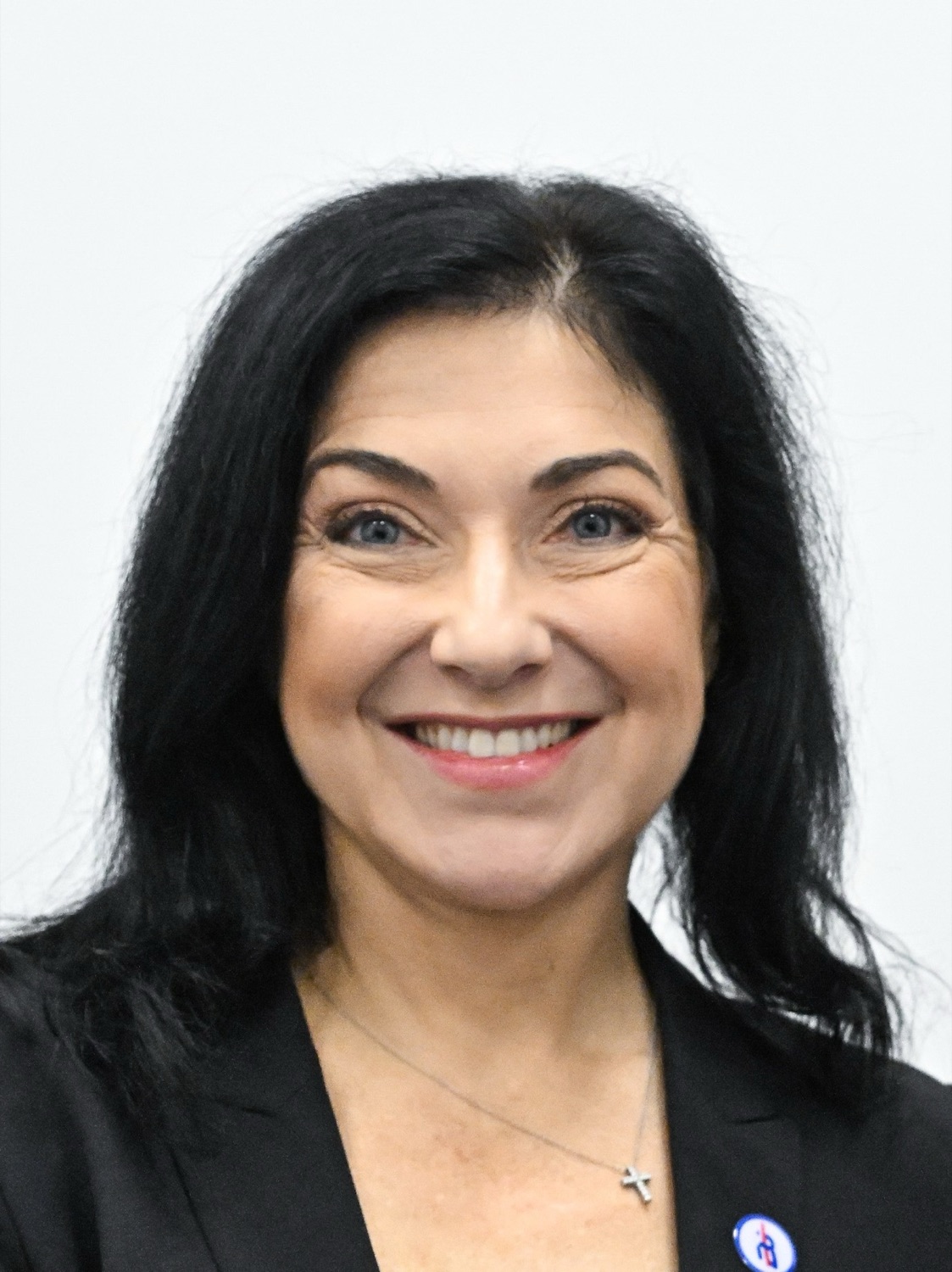
Born on 16 July in Luckenwalde, Brandenburg, then part of the GDR
Her age on entering the Bundestag on 26 October 1998
Member of the Bundestag, 1998–2015, including four years as a deputy parliamentary group chair
Sworn in as Federal Minister for Economic Affairs and Energy on 6 May
Who is Katherina Reiche?
A profile that keeps fact, position, analysis and criticism apart.
Katherina Reiche (born 1973) is a German politician of the Christian Democratic Union (CDU) and, since 6 May 2025, Federal Minister for Economic Affairs and Energy in the cabinet of Chancellor Friedrich Merz. She heads the ministry responsible for Germany's energy supply, electricity and gas markets, industrial policy, foreign trade and economic growth. It is one of the most consequential portfolios in Europe's largest economy.
She grew up in Luckenwalde in the former GDR, studied chemistry at the University of Potsdam and graduated as a Diplom-Chemikerin in 1997. A year later, aged 25, she entered the Bundestag. Over seventeen years in parliament she led the CDU/CSU group's work on education and research and served as deputy parliamentary group chair. She was then parliamentary state secretary in the federal environment ministry and the federal transport ministry.
In 2015 she left politics for the energy industry. She led the Verband kommunaler Unternehmen (VKU), the association of Germany's municipal utilities, and from 2020 ran Westenergie, E.ON's largest subsidiary and a major distribution-grid operator. She also chaired the federal government's National Hydrogen Council. Her return to government in 2025 as energy minister made her one of the few German ministers to have run a large company in the sector she now regulates. Supporters see that as an asset; critics raise conflict-of-interest concerns, and this site documents both views.
Science → politics → industry → government
Four distinct phases, each building on the last: technical training, parliamentary and ministerial experience, executive leadership in regulated infrastructure, and finally responsibility for the whole economic and energy portfolio.
- 1992–1998
Science
Chemistry at the University of Potsdam, with research periods at Clarkson University (USA) and the University of Turku (Finland). Diploma in 1997, then research associate in Potsdam.
Education & science - 1998–2015
Politics
Bundestag member for Brandenburg. Deputy CDU/CSU group chair for education, research, environment and nuclear safety (2005–2009). Parliamentary state secretary for the environment (2009–2013) and for transport (2013–2015).
Bundestag career - 2015–2025
Industry
Chief executive of the municipal utilities association VKU, member of the federal coal commission, CEO of the E.ON grid subsidiary Westenergie and chair of the National Hydrogen Council.
Professional career - Since 2025
Government
Federal Minister for Economic Affairs and Energy, responsible for energy supply and prices, power-plant and grid policy, industry, trade and growth.
Federal government
The portfolio, field by field
Each field has its own in-depth page with context, statistics, her documented positions and the main lines of criticism.
Energy policy
Electricity and gas markets, renewables, affordability and the September 2025 "reality check" of the Energiewende.
Explore 12 · SecurityEnergy security
Life after Russian gas: Norwegian pipelines, LNG terminals, gas storage, a strategic reserve and the 2026 price shock.
Explore 13 · InnovationHydrogen & future energy
From chairing the National Hydrogen Council to a 9,040 km core network, CCS and a more market-led ramp-up.
Explore 14 · IndustryIndustry & economy
Energy-intensive industry under pressure, an industrial electricity price and growth forecasts that kept falling.
Explore 15 · NetworksInfrastructure
Transmission corridors, distribution grids, the 2026 grid package and a €500 billion infrastructure fund.
Explore 16 · TransitionClimate & transition
Climate targets set in law versus the energy-policy choices made to reach them, and where she stands.
Explore 20 · Europe & worldInternational energy
EU state-aid approvals, the ban on Russian gas, trade with the US and China, support for Ukraine's grid.
Explore 17 · PositionsPolitical positions
Her documented views, topic by topic, with how they developed and who disagrees.
Explore 18 · InitiativesMajor initiatives
Case studies from the 2012 solar debate to the 2026 capacity law and heating reform.
Explore
Germany's energy transition, and her place in it
Germany has already rebuilt its energy system once in a generation. It ended nuclear power on 15 April 2023, has legislated to end coal power by 2038 at the latest, and is committed to climate neutrality by 2045. Russia's war against Ukraine forced it to replace a supplier that provided roughly half of its gas imports.
Reiche has worked on almost every stage of this story. She voted on the 2011 nuclear phase-out and defended solar-subsidy cuts in 2012. She sat on the coal commission in 2018–2019 and ran a distribution-grid company, the level of the network to which, by the company's own account, more than 95 per cent of renewable installations are connected. Since 2025 she has been responsible for making the system affordable and secure. Her stated priority is cost efficiency, which critics say comes at the expense of the pace of renewable expansion.
Renewables' share of gross electricity consumption in 2025 (preliminary)
AG Energiebilanzen, 2026Greenhouse-gas emissions in 2024 compared with 1990 (649 Mt CO₂e)
UmweltbundesamtNorway's share of German gas imports in 2025, now the largest supplier
Bundesnetzagentur, 2026Hydrogen core network approved in October 2024, to be completed by 2032
Bundesnetzagentur / FNB GasPolitical career and professional leadership
In public office
- 1998
Elected to the Bundestag
Enters on 26 October 1998, aged 25, via the CDU's Brandenburg state list.
- 2005–2009
Deputy parliamentary group chair
Responsible for education, research, environment and nuclear safety in the CDU/CSU group under Volker Kauder.
- 2009–2015
Parliamentary state secretary
At the environment ministry under Norbert Röttgen and Peter Altmaier, then at the transport ministry under Alexander Dobrindt.
- 2013
Wins Potsdam directly
Takes the constituency with 32.6% of first votes after two third-place finishes.
- 6 May 2025
Federal minister
Appointed Federal Minister for Economic Affairs and Energy in the Merz cabinet.
In the energy industry
- 2015–2019
Chief executive, VKU
Leads the federal association of municipal utilities, which today has more than 1,600 member companies in energy, water, waste and broadband.
- 2016–2019
President, CEEP
Heads the European association of public-service employers and enterprises.
- 2018–2019
Coal commission
Member of the federal commission on growth, structural change and employment.
- 2020–2025
CEO, Westenergie
Runs E.ON's largest subsidiary, with around 196,000 km of power lines and 37,000 km of gas network (company figures, 2024).
- 2020–2025
Chair, National Hydrogen Council
Leads the federal government's expert advisory body on the hydrogen strategy.
Defining files as minister
Three of the measures that have shaped her term so far. Each is examined as a full case study, including criticism.
-
The energy-transition "reality check"
15 September 2025An external monitoring report by EWI and BET put 2030 electricity demand at 600–700 TWh, below the earlier 750 TWh planning assumption. She paired it with a ten-point plan to align renewables and grids with demand and to end fixed feed-in tariffs.
Case study -
New controllable power plants
2025–2026After talks with the European Commission, the target fell from up to 20 GW to 12 GW of hydrogen-ready plants and other controllable capacity. The capacity law passed the Bundestag on 9 July 2026, and the first 4.5 GW auction was heavily oversubscribed.
Case study -
Energy price relief for industry
From 1 January 2026The relief package abolished the gas storage levy, added a €6.5 billion grid-fee subsidy and made a cut in industrial electricity tax permanent. The government puts the total at about €10 billion a year. The EU approved an industrial electricity price in April 2026.
Case study
Five decades, at a glance
Scroll through the milestones, or open the full editorial timeline.
- 1973
Born in Luckenwalde
16 July, in the GDR's Bezirk Potsdam.
Early life - 1997
Diplom-Chemikerin
Graduates in chemistry from the University of Potsdam.
Education - 1998
Enters the Bundestag
Aged 25, via the CDU's Brandenburg list.
Bundestag - 2002
Stoiber's campaign team
A national debate over her family-policy brief.
Controversies - 2009
State secretary
Joins the federal environment ministry.
Government - 2015
To the VKU
Leaves parliament to lead the municipal utilities association.
Career - 2020
Westenergie & hydrogen
Becomes CEO of Westenergie and chair of the National Hydrogen Council.
Hydrogen - 2025
Federal minister
Sworn in on 6 May in the Merz cabinet.
Ministry - 2026
Capacity & heating laws
The Bundestag passes both in July 2026.
Full timeline
Praise, criticism and the evidence
Reiche's appointment was welcomed by industry federations and criticised by transparency campaigners. Her policies have been praised for cost discipline and attacked for slowing renewables.
This website does not take sides. Every page separates Verified fact from Political position, Analysis and Criticism, and lists its sources. The controversies page sets out each dispute: the 2002 campaign team, the 2015 move into industry, conflict-of-interest concerns since 2025, and the debates over solar, gas and working hours. For each one it gives the criticism alongside her documented response.
- Bundesregierung — Lebenslauf Katherina Reiche
- AG Energiebilanzen — Stromerzeugung 2025
- Umweltbundesamt — Treibhausgas-Emissionen in Deutschland
- Bundesnetzagentur — Gas supply 2025
- FNB Gas — Hydrogen core network
- pv magazine, 15 September 2025 — Monitoring report
- Federal Government — Reduction in energy prices
- pv magazine, 9 July 2026 — Bundestag passes capacity law
- Westenergie statement to the NRW Landtag, October 2024 (PDF)
- Clean Energy Wire — Merz's surprise pick